Green Flowers: A Delightful Serif Font for Handmade Labels, Invitations, and More
I was sitting at my desk, finalizing a set of candle labels for a new seasonal line, when I realized the font I’d been using just didn’t feel right. It was too stiff, too formal for the cozy, botanical vibe I was going for. That’s when I opened up my font library and clicked on Green Flowers. From the very first letter, I knew I’d found the perfect match.
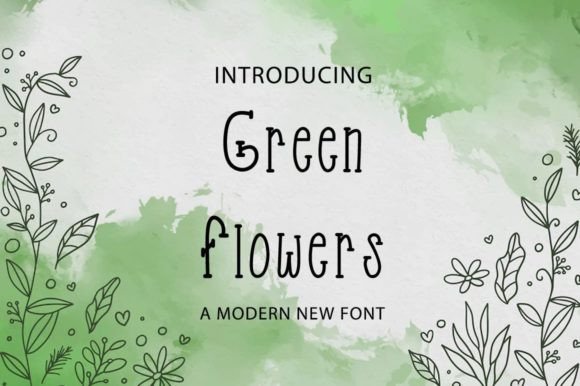
Green Flowers is a charming serif font with a soft, whimsical touch. It’s not overly ornate, but it carries just enough character to make your text feel personal and intentional. The gentle curves and subtle serifs give it a vintage-inspired, yet modern appeal—ideal for crafters and small business owners who want to add a touch of warmth and elegance to their handmade products.
Since that candle label project, I’ve used Green Flowers across a wide range of my shop items. It shines brightest in short-form text like product names, tags, and titles. I’ve printed it on sticker sheets for planners, used it on boutique tags for handmade soaps, and even incorporated it into digital greeting cards. Each time, it brings a soft, approachable energy that customers seem to respond to.
Perfect for Handmade Labels and Packaging Design
One of my favorite uses for Green Flowers is in product labeling. Whether I’m designing candle jars, soap packaging, or tea tins, this font adds a touch of botanical charm that feels both handmade and high-quality. Because it’s a serif font, it reads as slightly more refined than a casual script, but it still maintains that cozy, personal feel.
When designing for small labels or tags, I make sure to keep the text size readable—especially for cutting machines like Cricut or Silhouette. Green Flowers holds up well even at smaller sizes, as long as you avoid using it for long paragraphs. It’s best suited for short, impactful phrases like “Lavender Dream,” “Cozy Night In,” or “Farmhouse Vanilla.”
Creating Invitations and Wedding Stationery with Style
Green Flowers has also become a go-to for wedding stationery and special event invitations. I recently designed a set of rustic-chic wedding welcome signs and place cards using this font. Its gentle serifs and flowing structure gave the text a romantic, timeless feel that complemented the floral and linen elements in the design.
For wedding stationery, I often pair Green Flowers with a clean sans serif font like Montserrat or Lato for body text. This contrast keeps the design balanced and modern while allowing the serif font to stand out in headings and names. It works beautifully for save-the-dates, RSVP cards, and even custom thank-you notes.
Printable Wall Art and Planner Pages
In my digital downloads shop, I’ve found that Green Flowers sells particularly well in printable wall art and planner inserts. It’s perfect for botanical quotes, seasonal affirmations, and cozy home décor prints. The font’s soft curves and natural feel lend themselves well to farmhouse, cottagecore, and garden-inspired aesthetics.
When creating planner pages, I use Green Flowers for titles and decorative elements like monthly headers or quote boxes. It pairs well with simpler fonts in bullet points and checkboxes, making the overall layout feel cohesive and easy to read. I always check that the font remains legible when scaled down for weekly spreads or habit trackers.
Stickers, Tags, and Seasonal Crafts
Green Flowers also works wonderfully for sticker sheets and boutique tags. I print them on matte sticker paper and use them for planners, gift tags, and product packaging. The font’s clean lines and soft edges make it easy to cut accurately with a Silhouette machine, and it looks just as good in black ink as it does in muted pastels.
For holiday crafts, I love using Green Flowers in printable tags and ornament labels. It gives a handmade, personalized touch to Christmas tags, Easter cards, and autumn-themed signs. I’ve even used it in SVG files for laser-cut wooden tags—its character spacing holds up well in both digital and physical formats.
Font Pairing and Design Tips
When pairing Green Flowers with other fonts, I typically go for a clean sans serif or a light script font. This helps maintain visual balance, especially in multi-layered designs. For example, I’ll use Green Flowers for the main title on a printable and pair it with a minimalist sans serif for supporting text. If I’m designing a more elaborate piece like a wedding invitation, I might add a second script font with swashes to echo the softness of Green Flowers.
It’s also important to check the font’s included styles and alternate characters. Green Flowers offers ligatures and swashes that can add a more customized look to your text. I use these in logos, social media graphics, and product mockups to make the type feel more intentional and polished.
Commercial Use and Licensing
As a small shop owner or printable creator, it’s crucial to verify the licensing terms of any font you plan to use in commercial products. Green Flowers is typically available with a commercial license, which means you can safely use it in product labels, digital downloads, and printables that you sell. Always double-check the font provider’s license agreement to ensure compliance, especially if you’re bundling the font with design assets or selling physical merchandise.
Final Touches and Real-World Testing
Before finalizing any design, I always test Green Flowers in different formats. I preview it on screen, print it out, and even test it on vinyl or heat transfer material if I’m using it for shirts or mugs. This helps me catch any spacing or readability issues early on.
One of the best things about Green Flowers is how versatile it is across both digital and physical mediums. Whether I’m creating a social media graphic for Instagram or printing a set of boutique tags for a craft fair, it consistently delivers a warm, approachable look that feels authentically handmade.